
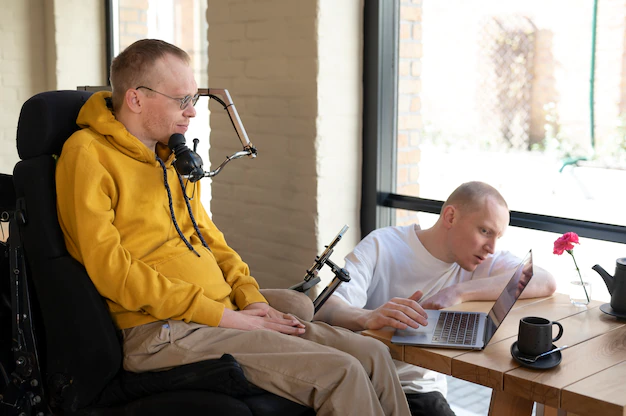
Why web accessibility is important

The Johns Hopkins University has an obligation to provide access to its services, including its Web sites, to staff, faculty, students and other users, and patrons in the community at large. Additionally, enhancing Web access may enable divisions to reduce support cost, user error, training time and cost, as well as development time.

Disability In the U.S.

According to the U.S. Census brief, Disability Status: 2000 (.pdf):

In the 2002 edition of the Digest of Educational Statistics, Table 211 presents the number of students enrolled in post secondary institutions, by level, disability status, and selected student characteristics, for the 1999-2000 academic year. 1,508,000 undergraduates and 161,000 graduate students reported one or more of the following conditions: specific learning disabilities, visual impairments, hard of hearing conditions, deafness, speech impediments, mobility impairments, or health impairments. By reporting these conditions, each student requested accommodations for their individual conditions. These conditions can include the following:

Visual Impairments

Visual impairments encompass many conditions including blindness, color blindness, reduced visual capabilities due to various medical conditions, injuries, or disease. These conditions may or may not be helped with corrective devices such as glasses.

Hearing Impairments

Hearing impairments encompass many degrees of hearing loss due to birth defects, injury, or disease. These conditions may or may not be helped with assistive listening devices such as hearing aids.

Mobility Impairments

Mobility Impairments include many conditions due to birth defects such as cerebral palsy, later in life conditions such as muscular dystrophy, carpal tunnel syndrome, multiple sclerosis, or head injuries or neurological conditions due to accidents. These conditions may result in reduced fine motor control.

Cognitive Disabilities

Cognitive disabilities include many impairments such as learning disabilities, attention deficit disorder, brain injury, or certain types of psychological conditions such as depression, manic depression, bipolar illness, obsessive compulsive disorder, Asperger Syndrome, or Tourette Syndrome. It is estimated by the Association on Higher Education And Disability (AHEAD) that 2-10% of the college or university population identifies a language-based disability each year that needs accommodations.

Making a Web site accessible can mean the difference between allowing and denying access for individuals with impairments.

Technology

When considering why web accessibility is important, consider the range of technologies available to users. Some users only have access to browsers that do not display images. Others who use web browsers may not have the latest version or may not use all of the browser features. When a Web site's accessibility is improved, its audience is expanded to include these users. Its potential audience is also expanded because these improvements make it easier for search engines to index it.

Other benefits of making Web sites accessible relate to reduced maintenance costs. With a device independence approach, less adaptation is necessary to create multiple versions. Well-designed site structure reduces the amount of coding necessary and allows manipulation of site content to suit different presentation styles. Style sheets separate content from format, thus facilitating updates to either one. The use of text alternatives for images, objects, and multimedia aids editing by identifying non-text content more easily.

To learn more about planning, designing, and building accessible web sites, see the What You Can Do section.